
Black Racer Snake Identification
Florida's Most Commonly Encountered Non-Venomous Snake
The black racer (Coluber constrictor priapus) is one of the most frequently seen snakes in Northeast Florida — and one of the most frequently misidentified as dangerous. Fast-moving, alert, and jet black, black racers are completely harmless to humans and are highly beneficial predators of rodents, insects, and other pests.
Quick Identification Guide
Size
Medium to large — typically 3 to 5 feet; slender and fast-moving
Color
Solid jet black on top; chin and throat are white or light gray — no pattern, no bands, no markings
Head shape
Narrow, slightly distinct from the neck — NOT broad or triangular like a pit viper
Pupils
Round pupils — black racers are NOT venomous and have no heat-sensing pit organs
Movement
Extremely fast — one of the fastest snakes in North America; moves in quick, fluid bursts and rarely holds still
Juveniles
Juveniles look completely different — gray or brown with reddish-brown blotches that fade to solid black by 1 to 2 years of age
Belly
Belly is dark gray to black toward the tail; chin and throat remain white or light gray
Scales
Smooth, glossy scales — not keeled; gives the body a sleek, shiny appearance
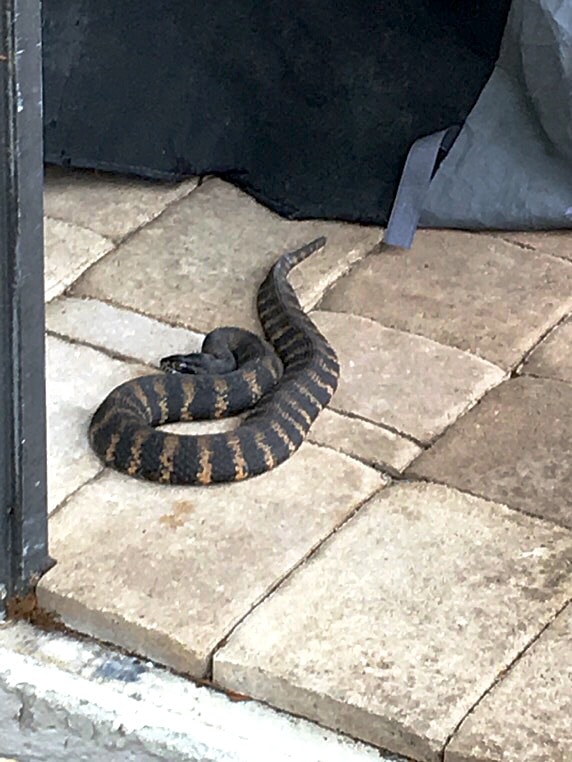
Behavior & Habitat
Where They Live
Black racers are found throughout Northeast Florida in virtually every habitat — pine flatwoods, hardwood hammocks, scrub, marshes, and suburban yards. They are highly adaptable and thrive in disturbed areas. In Jacksonville they are commonly encountered in gardens, along fence lines, in garages, and crossing roads. They are active during the day and are among the most visible snakes in the region.
Defensive Behavior
When cornered or handled, black racers vibrate their tail rapidly in leaf litter — producing a buzzing sound that mimics a rattlesnake. They may also strike repeatedly and release a foul-smelling musk. Despite this dramatic defense, they are not venomous and pose no danger to humans. Their first response is almost always to flee at high speed.
Benefits to Your Property
Black racers are voracious predators of mice, rats, lizards, frogs, and insects. A single black racer on your property is actively controlling rodent and pest populations. They are also known to prey on other snakes, including venomous species. Leaving black racers undisturbed is one of the most effective forms of natural pest control available to homeowners.
Common Look-Alikes in Northeast Florida
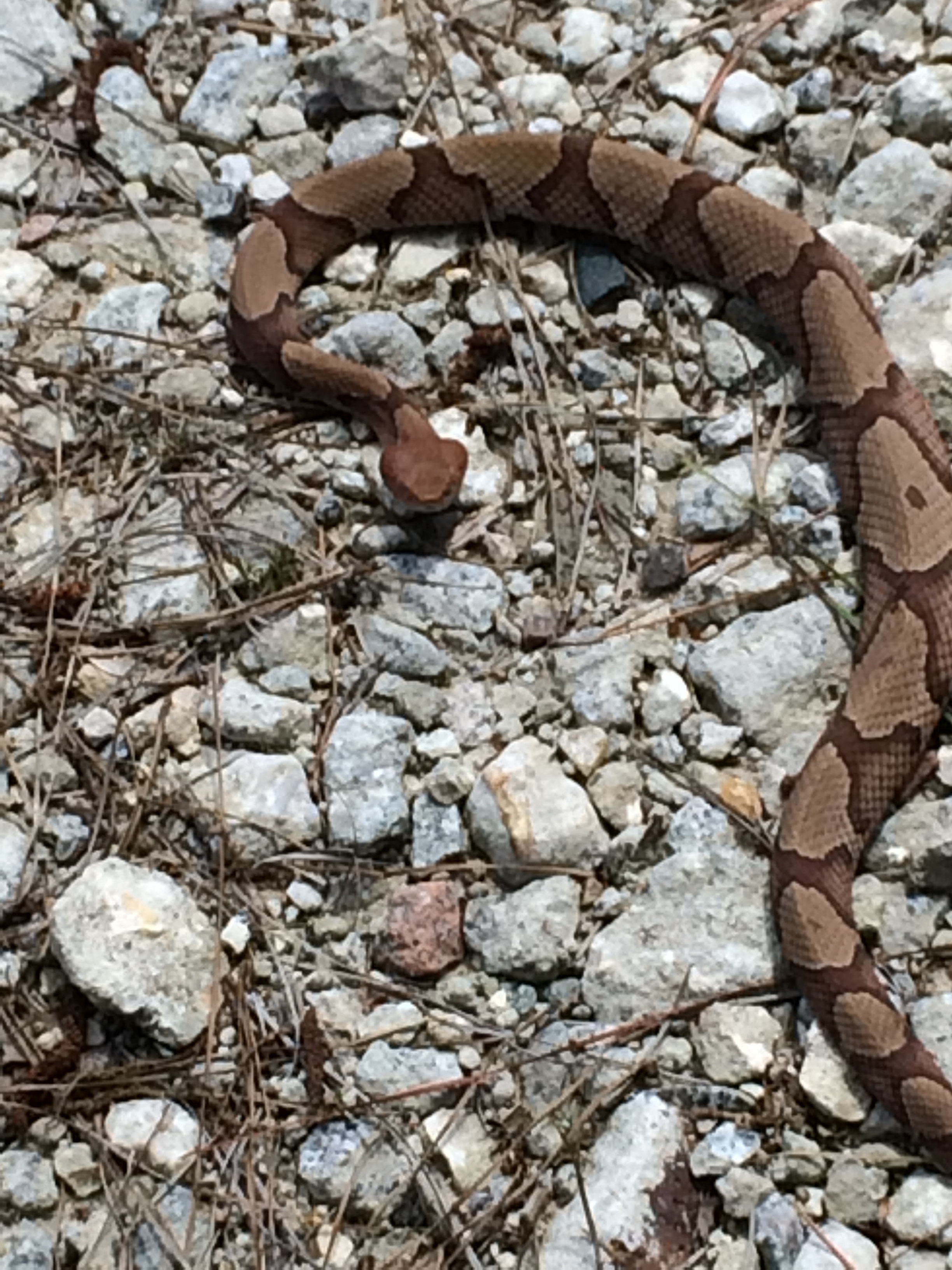
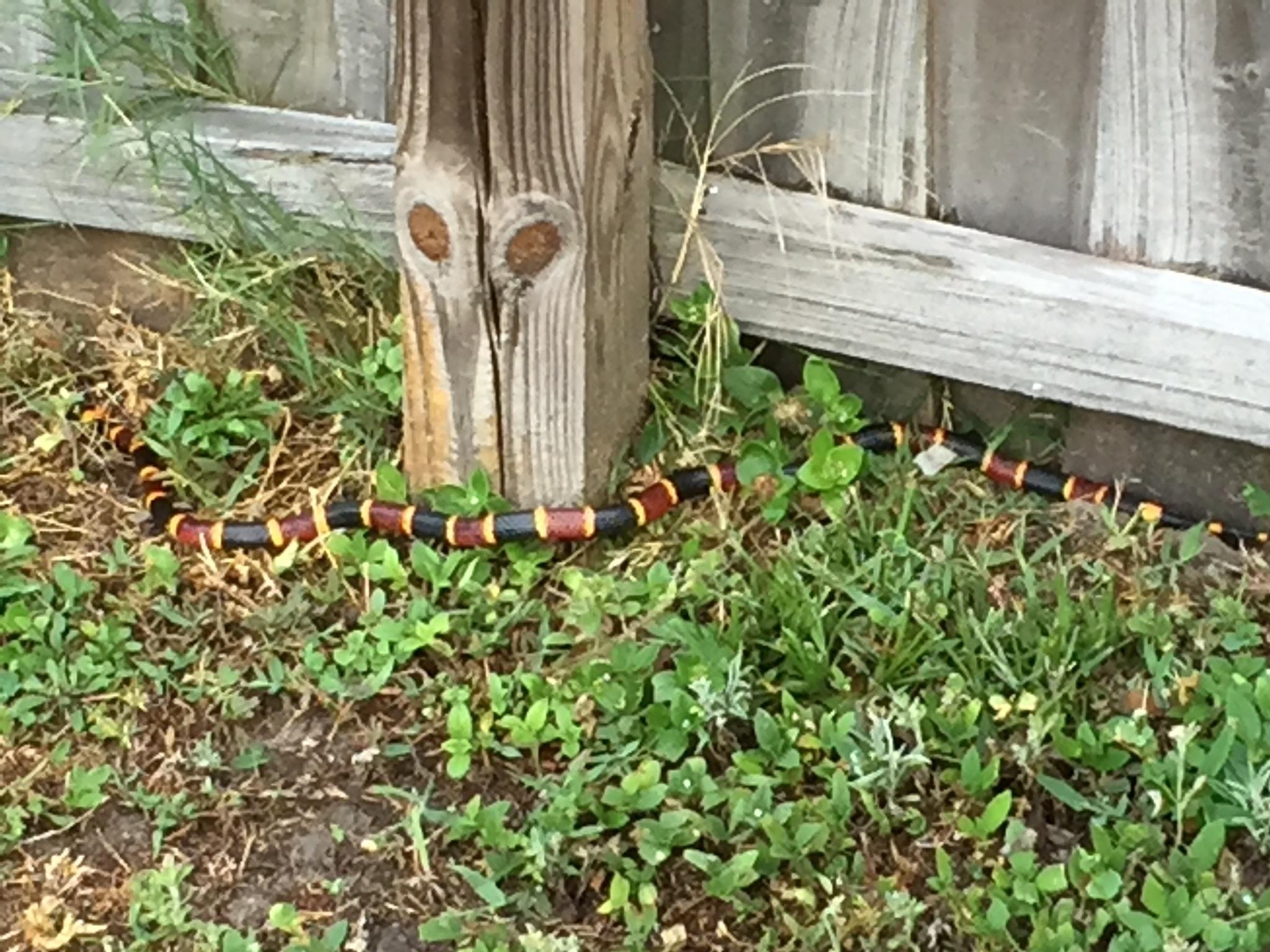
Several species are commonly confused with the black racer — including one venomous species. Correct identification matters both for your safety and for the protection of beneficial non-venomous snakes.
Eastern Ratsnake (Pantherophis alleghaniensis)
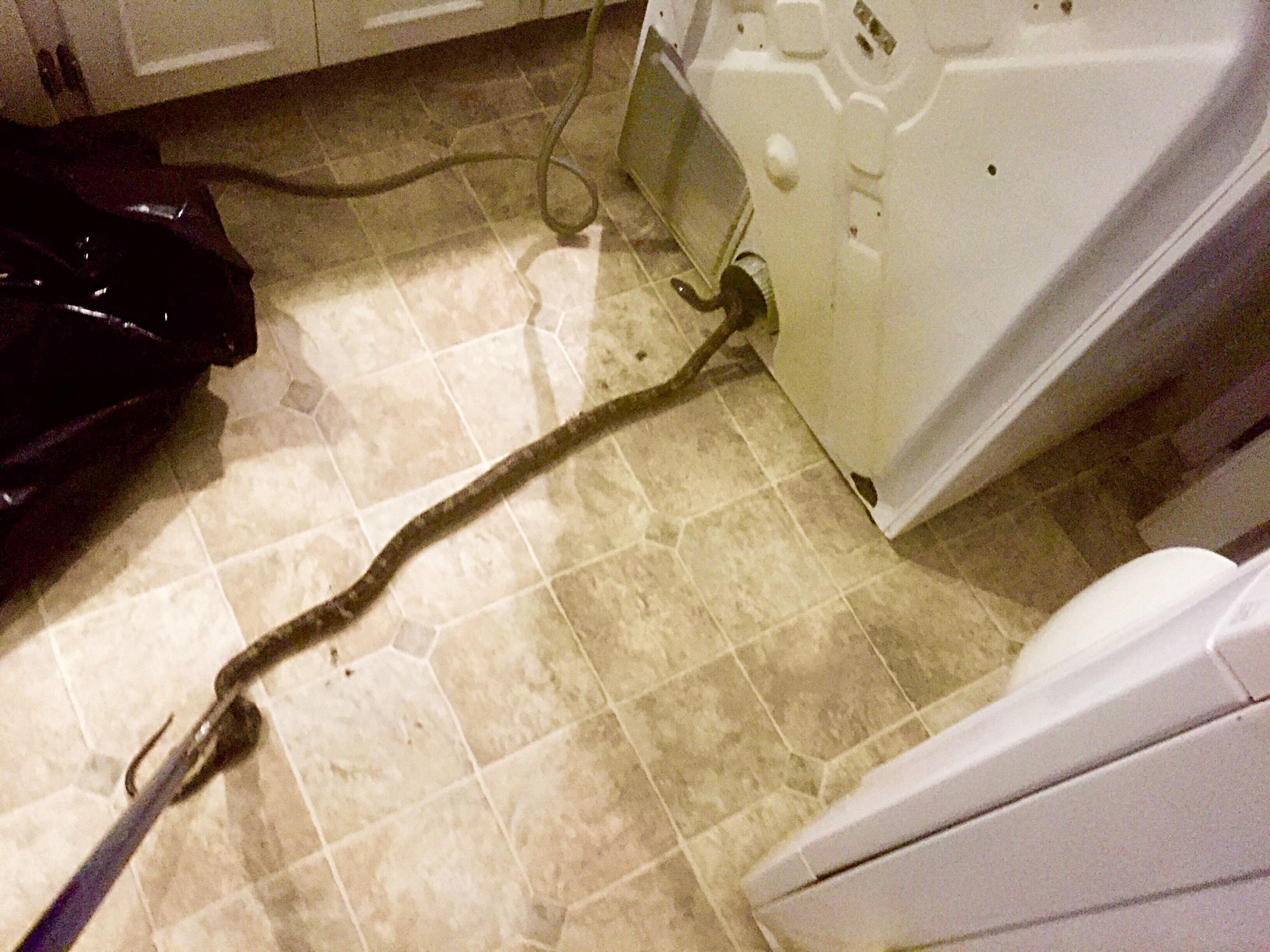
Non-venomousAdults are also solid black but have a slightly heavier body, weakly keeled scales with a dull rather than glossy finish, and move more slowly. The belly has a faint checkered pattern. Often found in trees and structures. Completely harmless and highly beneficial — one of the best rodent-control snakes in Florida.
Cottonmouth / Water Moccasin (Agkistrodon piscivorus)
VenomousVENOMOUS. Dark-colored cottonmouths are sometimes confused with black racers near water. Key differences: cottonmouths have a broad, triangular head dramatically wider than the neck, vertical cat-like pupils, heat-sensing pit organs, heavy body, and move slowly. Black racers are slender, fast, and have round pupils. If you are near water and unsure, treat the snake as venomous and call a professional.
Indigo Snake (Drymarchon couperi)
Non-venomousAlso solid black but significantly larger — up to 8 feet — with a reddish-orange chin and throat rather than white. Federally threatened and extremely rare. Smooth, glossy scales similar to the black racer. If you see a very large solid black snake with a reddish chin, do not disturb it — contact Florida Fish and Wildlife.
Ringneck Snake (Diadophis punctatus)
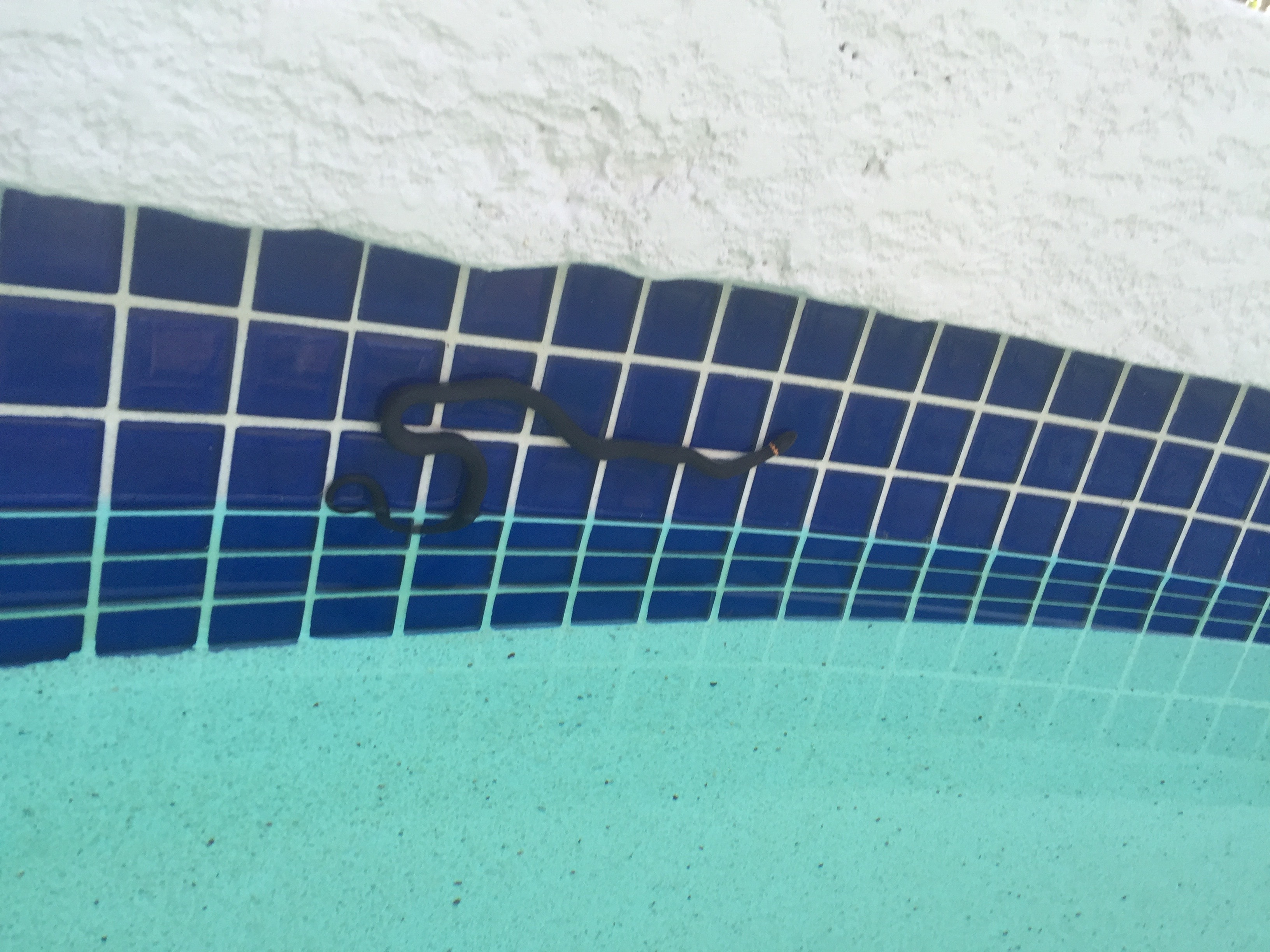
Non-venomousSmall, slender, dark gray to black with a distinctive orange or yellow ring around the neck and a bright orange-red belly. Much smaller than a black racer — typically under 15 inches. Completely harmless. Often found under logs, bark, and garden debris.
Should You Remove a Black Racer?
Black racers are non-venomous, harmless to humans, and actively beneficial. In most cases, the best course of action is to leave them alone — they will move on naturally and continue controlling rodents and pests on your property. However, if a black racer has entered your home, garage, or a structure, or if you have young children or pets that may be frightened or harmed by a defensive bite, professional relocation is a safe and humane option. We can safely remove and relocate any snake — venomous or not — from your property.
What To Do If You See One
Stay calm — black racers are harmless and will almost always flee immediately
Give it space and let it move on — most encounters resolve themselves within minutes
Do not attempt to handle it — a cornered black racer will bite defensively, though the bite is harmless
If it has entered a structure, close off the room and call us for safe removal
If you are unsure whether the snake is venomous, treat it as venomous and call a professional
Call Jacksonville Snake Removal at (904) 512-1281 — we handle venomous and non-venomous snakes
Not Sure What Snake You Have?
When in doubt, call a professional. We identify and safely remove venomous and non-venomous snakes throughout Jacksonville, St. John's County, and St. Augustine — 24/7.
Call (904) 512-1281