
Eastern Diamondback Rattlesnake Identification
North America's Largest Venomous Snake — Found Throughout Northeast Florida
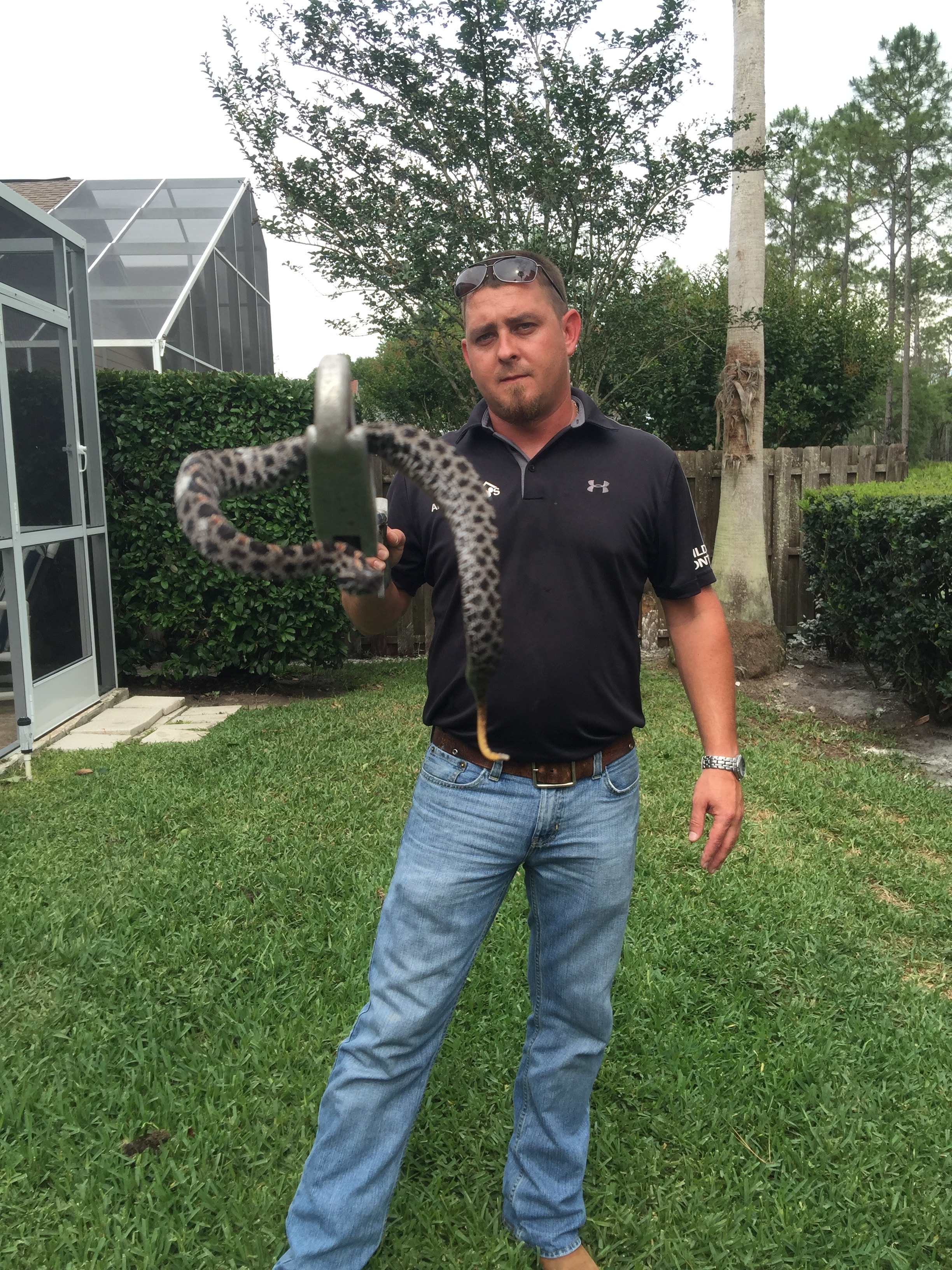
The eastern diamondback rattlesnake (Crotalus adamanteus) is the largest venomous snake in North America and one of the most dangerous. Found in pine flatwoods, palmetto scrub, and suburban edges throughout Northeast Florida, it demands immediate respect and professional removal.
Quick Identification Guide
Size
Large — typically 3.5 to 5.5 feet; record specimens exceed 7 feet and 10 lbs
Head shape
Very large, broad, distinctly triangular head — dramatically wider than the neck
Pattern
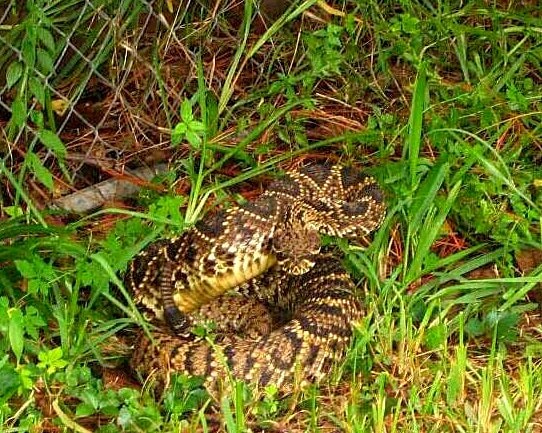
Bold black or dark brown diamond shapes outlined in cream or yellow down the back — unmistakable at close range
Rattle
Large, loud, multi-segmented rattle — produces an unmistakable buzzing rattle when threatened
Pupils
Vertical, elliptical (cat-like) pupils
Pit organs
Deep heat-sensing pit between eye and nostril on each side
Coloring
Gray, brown, or olive base color with cream-outlined diamonds; two light diagonal stripes on the face
Body
Extremely heavy, muscular body — the thickest of any North American rattlesnake; keeled scales give a rough texture
Behavior & Habitat
Where They Live
Eastern diamondbacks prefer dry, sandy upland habitats — longleaf pine flatwoods, palmetto scrub, sandhills, and coastal scrub. In Northeast Florida they are found in undeveloped lots, golf course rough, rural properties, and suburban edges adjacent to natural areas. They shelter in gopher tortoise burrows, hollow logs, and dense palmetto clumps.
Activity & Movement
Primarily active from spring through fall, but Northeast Florida's mild winters mean they can be encountered year-round. They are ambush predators that may remain motionless for days waiting for prey. Despite their size, they are well-camouflaged and easy to overlook against leaf litter and pine straw.
Threat Response
When threatened, eastern diamondbacks coil, rattle loudly, and may strike from a distance of up to two-thirds their body length — potentially 3 to 4 feet. They typically rattle before striking, but not always. Never approach, attempt to handle, or try to kill one. Back away slowly and call a professional immediately.
Common Look-Alikes in Northeast Florida
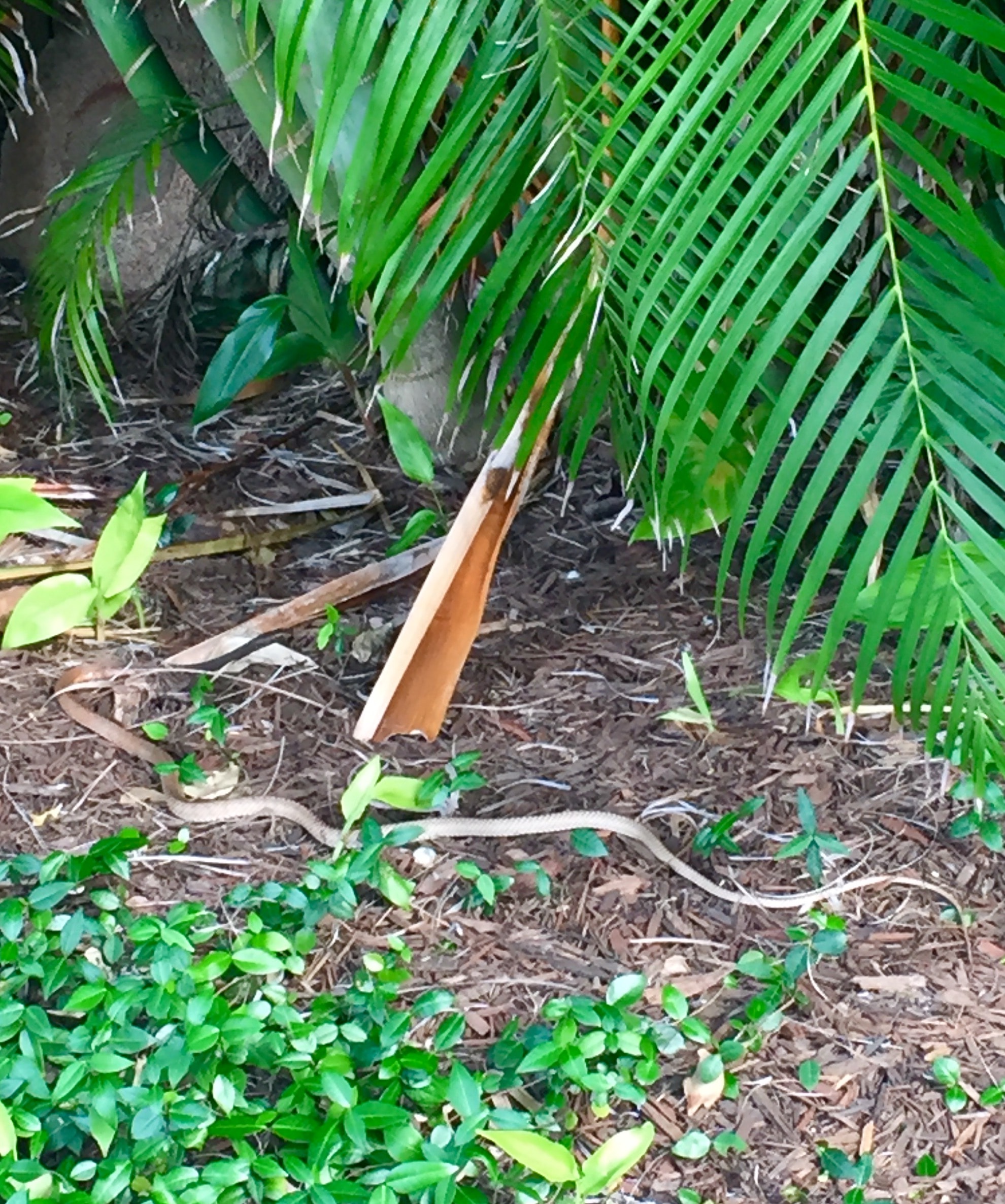
The eastern diamondback's bold pattern is distinctive, but several harmless species share similar coloring or habitat. Correct identification protects both people and beneficial non-venomous snakes.
Eastern Ratsnake (Pantherophis alleghaniensis)
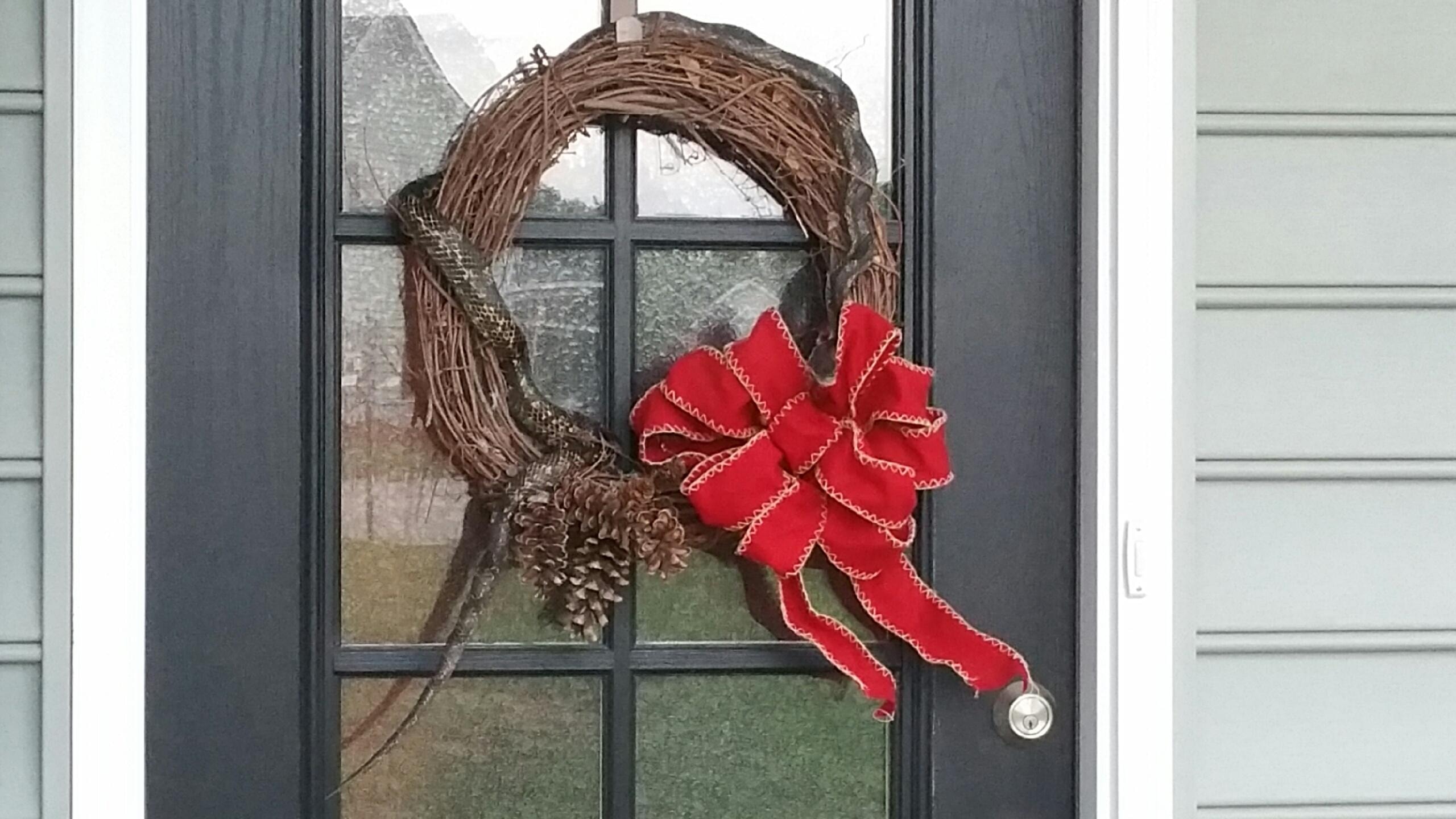
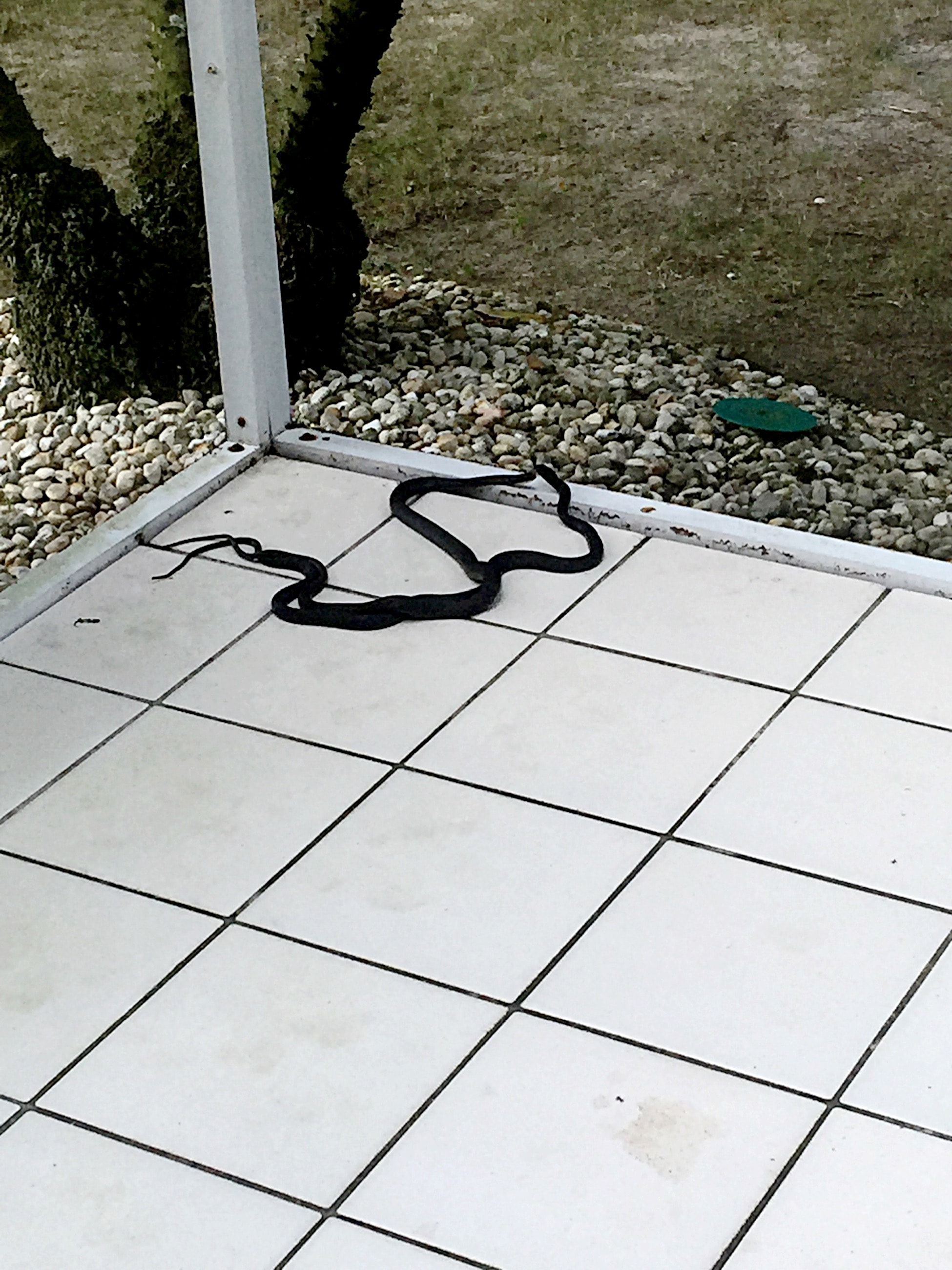
Non-venomousBlack or dark gray with faint blotching in adults; juveniles have a more distinct blotched pattern that can cause confusion. Round pupils, no rattle, slender body, narrow head. Very common in Northeast Florida — one of the most frequently misidentified snakes.
Florida Pine Snake (Pituophis melanoleucus mugitus)
Non-venomousBlotched pattern on a pale background. Round pupils, no rattle, narrow head, pointed snout. Hisses loudly and vibrates tail when threatened — the tail vibration in dry leaves can mimic a rattle. Completely harmless and a beneficial rodent predator.
Eastern Hognose Snake (Heterodon platirhinos)
Non-venomousBlotched pattern and defensive behavior (head flattening, hissing) can alarm people. Round pupils, no rattle, upturned snout, slender body. Much smaller than a diamondback. Will play dead when threatened. Completely harmless.
Corn Snake (Pantherophis guttatus)
Non-venomousOrange-red blotches with black borders on a gray or brown background. Round pupils, no rattle, slender body, narrow head. Very common in yards and gardens. Juveniles especially may be confused with small rattlesnakes — look for the narrow head and round pupils.
Venom & Medical Importance
Eastern diamondback venom is hemotoxic — it destroys red blood cells, disrupts clotting, and causes massive local tissue necrosis. A large adult can deliver an enormous venom load in a single strike. Bites are life-threatening medical emergencies. Symptoms include immediate severe pain, rapid swelling, internal bleeding, and tissue destruction that can require amputation if treatment is delayed. If bitten: call 911 immediately, keep the victim calm and still, immobilize the bitten limb below heart level, and remove rings or tight clothing near the bite. Do NOT apply a tourniquet, cut the wound, apply ice, or attempt to suck out venom.
What To Do If You See One
Stop immediately — do not take another step toward the snake
Back away slowly to a safe distance — at least 10 feet
Keep all people and pets away from the area
Do not attempt to handle, pin, move, or kill the snake under any circumstances
Note the exact location — under a structure, in brush, near a door — to help the technician
Call Jacksonville Snake Removal at (904) 512-1281 for immediate professional response
Licensed Diamondback Removal — Northeast Florida
Our technicians are trained in safe venomous snake handling and relocation. We serve Jacksonville, St. John's County, and St. Augustine 24/7.
Call (904) 512-1281