
Copperhead Snake Identification
A Well-Camouflaged Pit Viper Found in Northeast Florida's Wooded Areas
The copperhead (Agkistrodon contortrix) is a venomous pit viper found in wooded and rocky habitats across Northeast Florida. Its exceptional camouflage and tendency to freeze rather than flee makes it one of the most commonly stepped-on venomous snakes in the United States.
Quick Identification Guide
Size
Medium — typically 2 to 3 feet; occasionally reaching 4 feet
Head shape
Broad, flat, distinctly triangular — copper or reddish-brown colored head, clearly wider than the neck
Pattern
Distinctive hourglass-shaped crossbands — wider on the sides, narrowing to a point at the center of the back — on a tan, copper, or pinkish-brown base
Head color
Solid copper or reddish-brown head with no pattern — the most reliable field mark
Pupils
Vertical, elliptical (cat-like) pupils
Pit organs
Heat-sensing pit between eye and nostril on each side
Tail tip
Juveniles have a bright yellow or greenish-yellow tail tip used for caudal luring to attract prey
No rattle
Copperheads have no rattle — they may vibrate their tail rapidly in leaf litter, producing a buzzing sound that mimics a rattlesnake
Behavior & Habitat
Where They Live
Copperheads favor wooded hillsides, forest edges, rocky outcroppings, and areas with abundant leaf litter. In Northeast Florida they are found along river corridors, hardwood hammocks, mixed pine-oak forest, and suburban lots with heavy tree cover. They are especially common near wood piles, brush piles, and stone walls — anywhere that provides cover and attracts rodents.
Freeze Response
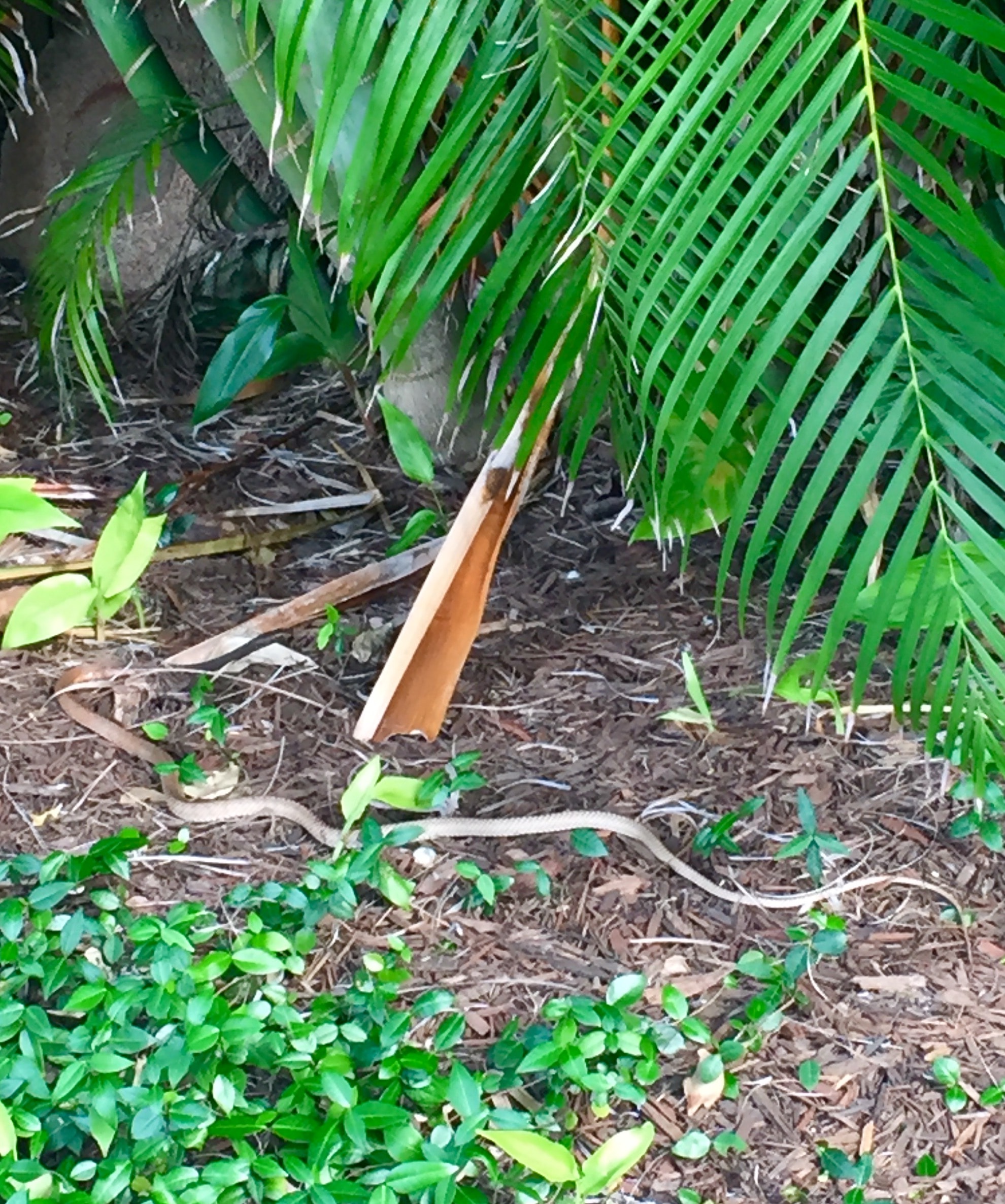
Unlike many snakes that flee when approached, copperheads frequently freeze and rely on their camouflage. Against leaf litter, pine straw, or dappled forest floor, they are extraordinarily difficult to see. This freeze response is the primary reason copperheads account for more venomous snakebites in the US than any other species — people simply don't see them until it's too late.
Activity Patterns
Copperheads are active from spring through fall, with peak activity at dusk and dawn during hot summer months. They are primarily nocturnal in summer, moving to warmer daytime activity in spring and fall. They are commonly encountered near outdoor lighting that attracts insects and the frogs and lizards that feed on them.
Common Look-Alikes in Northeast Florida
The copperhead's hourglass pattern is mimicked by several harmless species. Misidentification is extremely common — knowing the differences can prevent both unnecessary snake deaths and dangerous misidentification of a venomous one.
Corn Snake (Pantherophis guttatus)
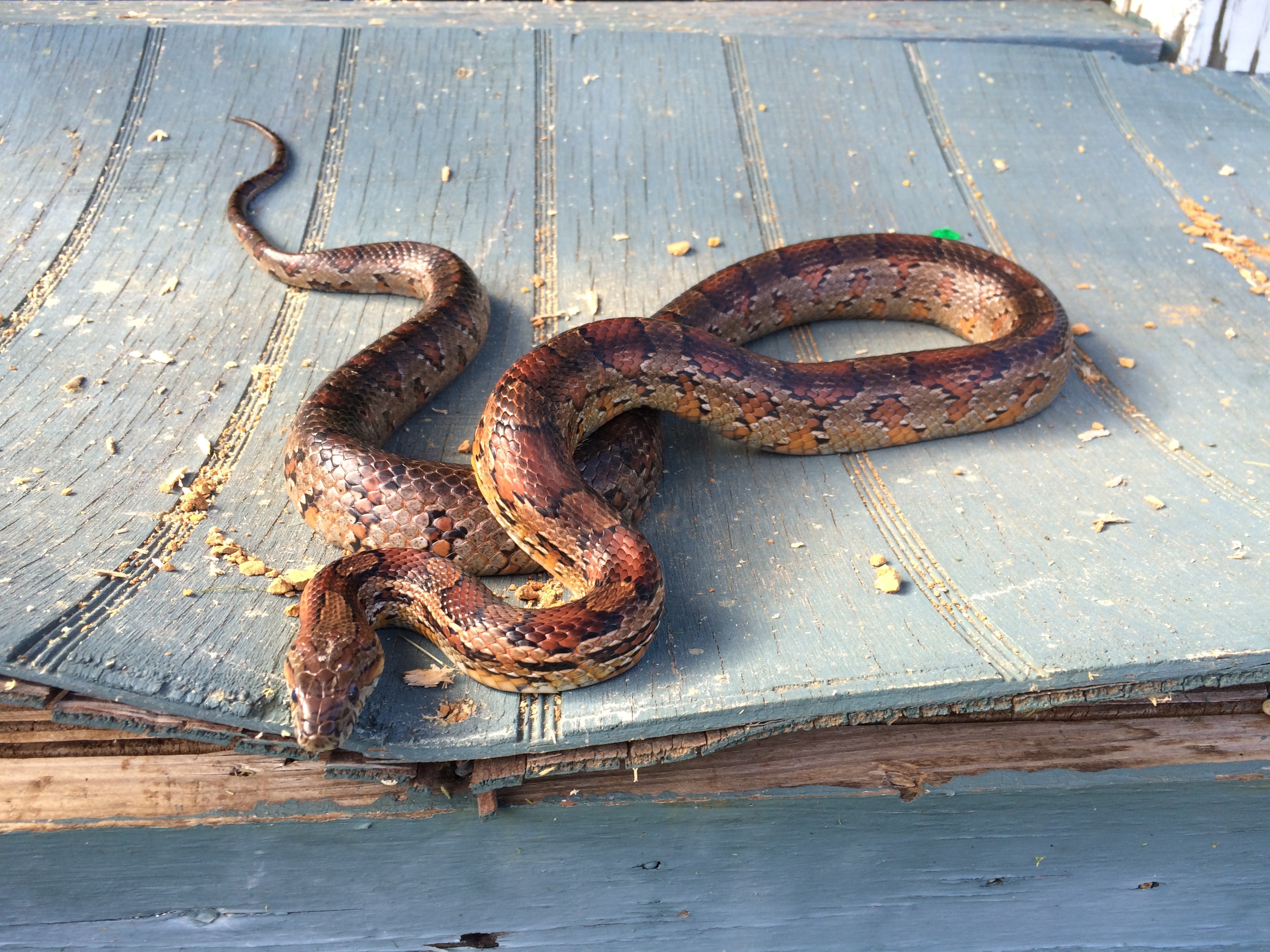
Non-venomousThe most commonly misidentified snake in the Southeast. Orange-red blotches with dark borders on a gray or brown background. Round pupils, no pit organs, narrow head that blends into neck, slender body. Belly has a distinctive black-and-white checkerboard pattern. Completely harmless and highly beneficial.
Eastern Hognose Snake (Heterodon platirhinos)
Non-venomousBlotched pattern and habit of flattening its head when threatened can mimic a pit viper. Round pupils, no pit organs, distinctive upturned snout, slender body. Will play dead dramatically when threatened. Completely harmless.
Banded Watersnake (Nerodia fasciata)
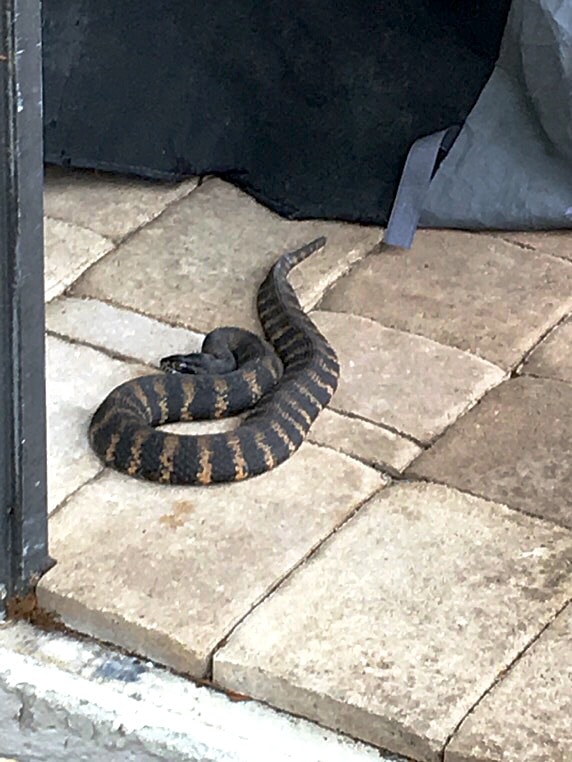
Non-venomousDark crossbands on a brown or reddish background. Round pupils, no pit organs, heavier body than a corn snake. Often found near water. Frequently misidentified as a cottonmouth or copperhead. Harmless, though it will bite defensively if handled.
Florida Watersnake (Nerodia floridana)
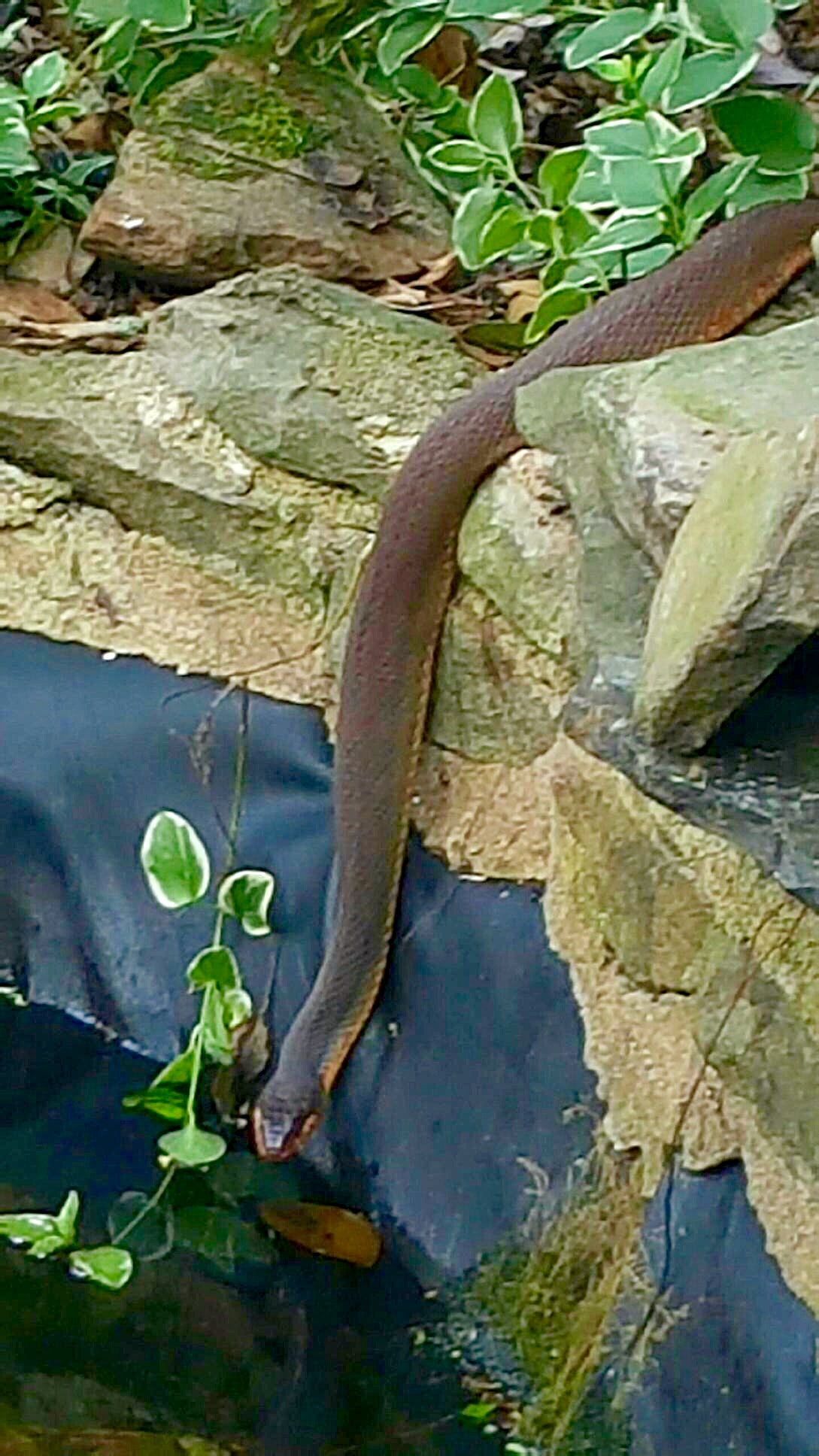
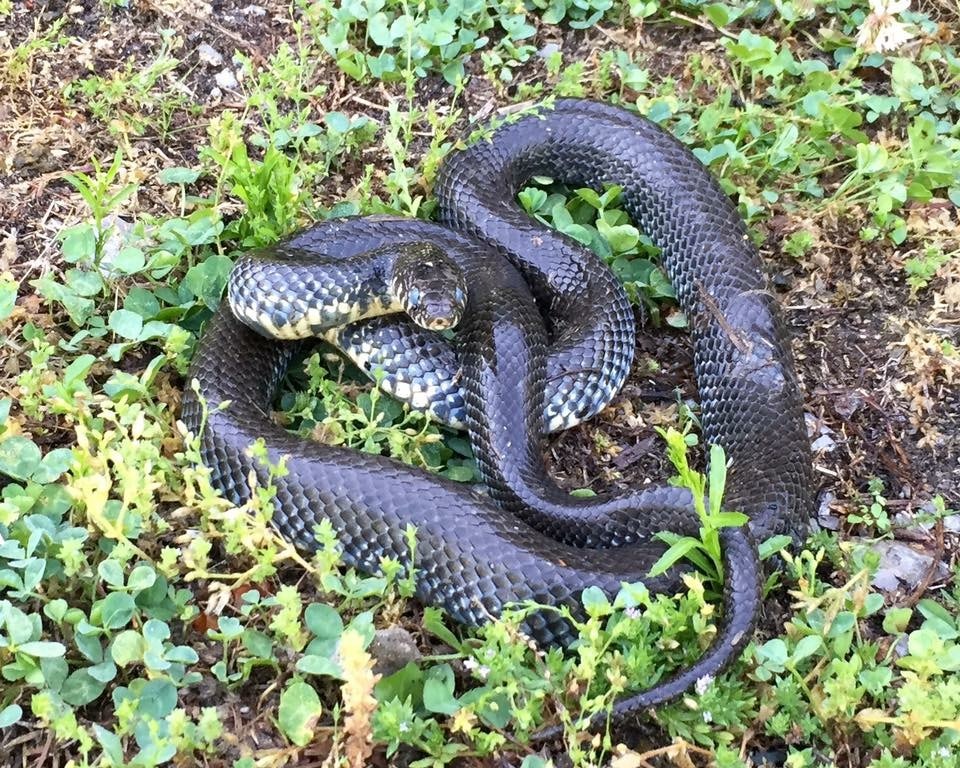
Non-venomousOlive, brown, or gray with faint banding or blotching. Round pupils, no pit organs. Aquatic — almost always found near water. Harmless, though defensive if handled. Often confused with cottonmouths and copperheads near ponds and streams.
Venom & Medical Importance
Copperhead venom is hemotoxic — it destroys tissue and disrupts blood clotting. While copperhead bites are rarely fatal in healthy adults, they cause significant local tissue damage, intense pain, and swelling that can require hospitalization and, in severe cases, surgery. Children, elderly individuals, and pets are at greater risk due to smaller body mass. Copperheads account for more venomous snakebites in the United States than any other species, largely due to their camouflage and freeze response. If bitten: stay calm, immobilize the limb, remove rings or tight clothing near the bite, and go to an emergency room immediately. Do NOT apply a tourniquet, cut the wound, apply ice, or attempt to suck out venom.
What To Do If You See One
Stop and look carefully at the ground around you before moving — they freeze and blend in perfectly
Back away slowly to a safe distance — at least 6 feet
Keep children and pets away from the area immediately
Do not attempt to handle, pin, move, or kill the snake
Note the exact location — under a wood pile, near a door, in leaf litter — to help the technician
Call Jacksonville Snake Removal at (904) 512-1281 for safe, professional removal
Licensed Venomous Snake Removal — Northeast Florida
Our technicians are trained in safe venomous snake handling and relocation. We serve Jacksonville, St. John's County, and St. Augustine 24/7.
Call (904) 512-1281