
Snake in Your Crawlspace
Professional Crawlspace Snake Removal — Same-Day Service Available
Crawlspaces are one of the most common snake harborage sites in Northeast Florida. Dark, humid, and often stocked with rodents, they offer everything a snake needs. We remove snakes from crawlspaces safely and seal the entry points that let them in.
Crawlspace Types We Service
Crawlspace construction varies across Jacksonville-area homes. Each type presents different access challenges and entry point patterns.
Pier-and-Beam Crawlspaces
The most common crawlspace type in older Jacksonville homes. Open perimeter vents and gaps around piers are the primary entry points. Snakes move freely through the open underfloor space and are often found coiled near the center beam or along the perimeter wall.
Block Foundation Crawlspaces
Concrete block perimeter walls with a vented crawlspace below the floor joists. Mortar gaps, damaged vent screens, and utility penetrations are the most common entry points. Cottonmouths and rat snakes are frequently found in this type.
Encapsulated Crawlspaces
Vapor-barrier-lined crawlspaces with sealed vents. Snakes still enter through utility penetrations and damaged barrier seams. Once inside an encapsulated crawlspace, snakes are harder to detect and harder to remove without disturbing the barrier.
Partial Crawlspaces
Homes with a mix of slab and crawlspace sections — common in additions and split-level construction. Snakes can move between the crawlspace and the slab section through shared wall penetrations, making full exclusion more complex.
Signs of a Snake in Your Crawlspace
Shed Skin
A shed skin near the crawlspace access hatch or along the perimeter wall is the most reliable sign. Rat snakes and black racers shed frequently and leave intact skins that are easy to identify.
Scratching or Movement Sounds
Rustling or dragging sounds from below the floor, especially at night. Larger snakes moving across vapor barrier or insulation batts produce a distinctive sound that homeowners often mistake for rodents.
Snake Entering the Vent
Direct observation of a snake entering or exiting a foundation vent. Rat snakes and black racers are active during the day and are sometimes seen entering vents in the morning or evening.
Damaged Vent Screens
Torn, bent, or missing vent screens are both a sign of past entry and an active entry point. Check all foundation vents for screen damage, especially on the north and east sides of the foundation.
Droppings Near Access Hatch
Snake droppings near the crawlspace access hatch or along the foundation perimeter. Snake droppings are tubular with a white uric acid cap and are often found near shed skins.
Rodent Activity Decrease
A sudden drop in rodent activity — fewer droppings, less gnawing damage — can indicate a snake has taken up residence and is actively hunting. This is common with rat snakes in crawlspaces with established rodent populations.
Why Snakes Enter Crawlspaces
Rodent Prey
Crawlspaces with rodent activity are the primary attractant. Rats and mice nest in insulation batts and along the perimeter wall. Rat snakes and black racers follow the food source directly into the crawlspace.
Temperature Regulation
Crawlspaces maintain a stable temperature year-round — cooler than the surface in summer, warmer than the open ground in winter. Snakes use crawlspaces for thermoregulation, particularly during temperature extremes.
Humidity and Moisture
Northeast Florida crawlspaces are often humid, especially in homes without vapor barriers or with poor drainage. Cottonmouths and other moisture-tolerant species are attracted to damp crawlspaces near drainage areas.
Undisturbed Harborage
Crawlspaces are rarely entered by homeowners, which makes them ideal undisturbed harborage. A snake can live in a crawlspace for months or years without being detected, especially in larger homes with complex underfloor layouts.
Common Species Found in Crawlspaces
Most crawlspace snakes in Northeast Florida are non-venomous rat snakes and racers following rodent prey. Venomous species are less common but do occur, particularly cottonmouths in homes near water.
Eastern Rat Snake
The most common crawlspace snake in Northeast Florida. Excellent climbers that follow rats and mice into crawlspaces through foundation vents and utility penetrations. Can reach 6 feet. Non-venomous but will bite if cornered.
Black Racer
Fast-moving, slender snake that enters crawlspaces in pursuit of rodents and lizards. More likely to flee than the rat snake. Frequently found near the perimeter wall and access hatch area.
Cottonmouth (Water Moccasin)
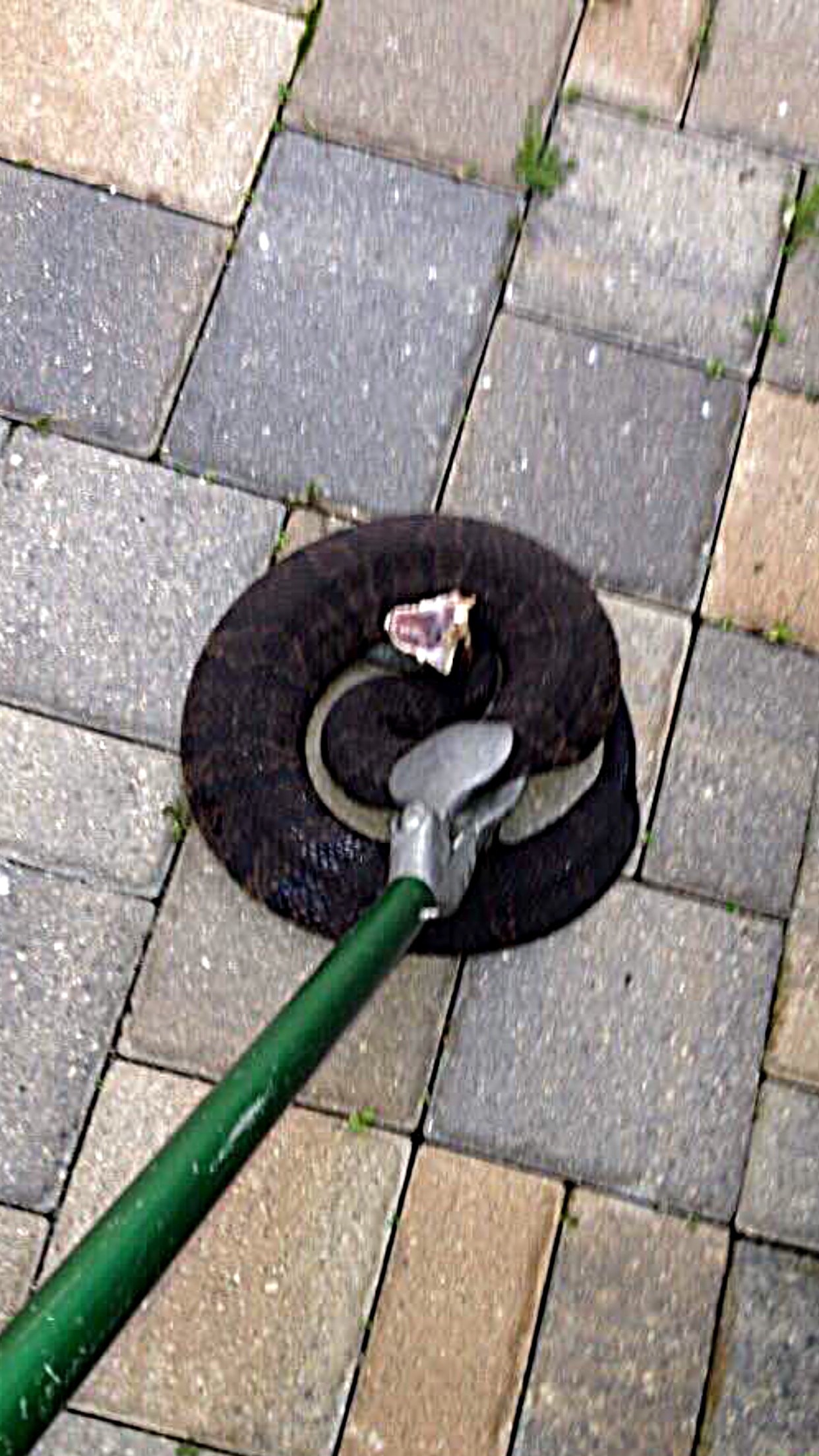
Found in crawlspaces of homes near drainage ditches, retention ponds, and wetlands. Attracted by moisture and rodent prey. Venomous and dangerous — do not attempt removal. Requires professional extraction with specialized equipment.
Corn Snake
Slender, orange-patterned snake that is an efficient rodent hunter. Commonly found in crawlspaces with active rodent populations. Often mistaken for the copperhead due to its patterning — a professional ID is always recommended.
Eastern Kingsnake
Immune to pit viper venom and known to prey on other snakes. Presence in a crawlspace sometimes indicates other snake species are also present. Non-venomous and generally docile.
Pygmy Rattlesnake
Small but venomous rattlesnake occasionally found in crawlspaces of homes near scrub and pine flatwood habitat. Easy to overlook due to its small size (12–24 inches). Requires professional removal.
Our Crawlspace Removal Process
Safe Access Assessment
Before entering the crawlspace, we assess access points, clearance height, and potential hazards including standing water, damaged vapor barrier, and electrical or HVAC equipment. We use appropriate PPE for all crawlspace entries.
Species Identification
We identify the species before any removal attempt. Venomous species require different equipment and protocols than non-venomous species. We never rush identification — a misidentified cottonmouth is a serious safety risk.
Professional Extraction
We remove the snake using professional capture equipment appropriate for the species and the confined crawlspace environment. Non-venomous species are relocated to appropriate natural habitat away from residential areas.
Full Crawlspace Inspection
After removal, we inspect the entire crawlspace for additional snakes, shed skins, egg clutches, and signs of rodent activity. A single snake removal without a full inspection frequently results in a second call.
Entry Point Identification
We locate every entry point — damaged vent screens, utility penetrations, gaps around piers, and foundation cracks — and document them with photos. Entry point identification is the foundation of effective exclusion.
Exclusion and Sealing
We seal identified entry points using hardware cloth, expanding foam, and appropriate sealants rated for crawlspace conditions. Exclusion without removal is ineffective — we always complete both in the same visit.
Snake in Your Crawlspace? Don't Go In.
We remove snakes from all crawlspace types throughout Jacksonville and Northeast Florida. Removal and exclusion in a single visit. Available 24/7.
Call (904) 512-1281 — Available 24/7Crawlspace Snake Prevention
Install Hardware Cloth on All Vents
Replace damaged or missing vent screens with 1/4-inch hardware cloth secured with screws, not staples. Standard fiberglass window screen is not adequate — snakes push through it easily. Inspect all vents annually.
Seal Utility Penetrations
Plumbing, electrical, and HVAC penetrations through the foundation wall are common entry points. Seal all gaps larger than 1/4 inch with expanding foam or hydraulic cement. Re-inspect after any plumbing or HVAC work.
Control Rodent Activity
Snakes follow rodents. A crawlspace with active rodent populations will attract snakes regardless of how well it is sealed. Address rodent infestations before or concurrent with snake exclusion work.
Install a Vapor Barrier
A properly installed 6-mil vapor barrier reduces crawlspace humidity, which discourages moisture-seeking species like cottonmouths. It also makes snake sign — shed skins, droppings, tracks — much easier to detect during inspections.
Maintain Crawlspace Access Hatch
The access hatch is a common entry point if it does not seal tightly. Ensure the hatch fits flush, has a functional latch, and has no gaps around the frame. A snake can enter through a 1/2-inch gap.
Annual Crawlspace Inspections
Schedule an annual crawlspace inspection to check for new entry points, rodent activity, and snake sign. Early detection prevents a single snake from becoming a recurring problem. We offer annual inspection programs throughout our service area.